
How to manage a crown that feels sensitive to air or cold liquids
I will never forget the first time I tried to enjoy a crisp autumn walk after getting my molar capped. I took one deep breath of that chilly October air, and—WHAM. It felt like someone had driven a frozen needle straight into my jawbone. I stood there on the sidewalk, hand over my mouth, looking like I had just seen a ghost. Honestly, I was convinced my dentist had botched the whole thing. I even started googling crowns vs veneers in a blind panic, thinking I had made a massive mistake. But here is the good news: that agonizing zing is usually manageable, and I have learned the hard way how to settle those temperamental nerves down. Today, I am going to show you why this happens and how to fix it without the middle-of-the-night dental anxiety. Have you ever felt that sudden, sharp jolt just from breathing in through your mouth on a cold day?
That Sharp Zing Usually Has a Simple Explanation
One big mistake I made early on was assuming that once the permanent cap was on, I was invincible. I went straight for the ice water, completely ignoring the fact that my tooth nerve had just been through what is essentially minor surgery. When a dentist prepares a tooth, they remove a significant amount of enamel, which brings the nerve closer to the surface. It is no wonder why your new crown feels sensitive to cold drinks for those first few weeks. According to the American Dental Association, dental pulp can stay inflamed for days or even weeks after a procedure, reacting to thermal changes as it tries to heal. If the crown is even a fraction of a millimeter too high, it can also cause the ligament to inflame, mimicking cold sensitivity. This is often the specific reason your crown feels tall and painful in the morning.
Is your crown actually failing you right now?
This is the question that kept me up at 2 AM. Usually, the answer is no. If the sensitivity started immediately, it is likely post-operative inflammation or a slight bite misalignment. However, if you are noticing why your crown feels sensitive to cold months after it was placed, we might be looking at gum recession or a tiny gap where the crown meets the tooth. It is also quite common to experience discomfort because of why your gums feel sore after the procedure, which can make everything in your mouth feel ten times more sensitive than it actually is. We are going to dive into the practical steps you can take at home to calm that nerve before you call the emergency line.
Determine if your bite is throwing everything off
If you feel a zing every time you sip water, the very first thing you need to do is a ‘click’ test. I once spent three days miserable because I thought my tooth was dying, but in reality, the crown was just a hair too tall. When one spot hits before the rest of your teeth, it acts like a tiny hammer constantly pounding on the nerve. This is why you need to know how to stop your new crown from feeling too high when you chew before you assume the worst. If the ligament around the tooth is bruised from that extra pressure, cold sensitivity becomes ten times worse. I remember sitting at a dinner party, barely able to speak because my crown felt like a mountain in my mouth. I had to wait until Monday to get it shaved down, and the relief was instantaneous—the cold sensitivity vanished within twenty-four hours because the nerve finally got a break.
Identify the morning-after ache
Do you notice the pain is worse right when you wake up? This often points to grinding. If you are clenching your jaw at night, you are essentially stressing a healing nerve that is already on edge. This is frequently the specific reason your crown feels tall when you wake up and why that first glass of orange juice feels like a lightning bolt. 
Swap your tools and your technique
You cannot treat a newly crowned tooth like a regular one for the first two weeks. I made the mistake of using my heavy-duty electric toothbrush on the highest setting right against the gumline of my new crown. Big mistake. You need to learn the safest way to use an electric toothbrush on sensitive teeth to avoid vibrating an already angry nerve. Switch to a desensitizing toothpaste containing potassium nitrate. This compound actually blocks the pathways between the tooth surface and the nerve, acting like a temporary ‘shield’ against the cold.
Rinse with salt to calm the tissues
Sometimes the sensitivity isn’t coming from the tooth itself, but from the gums that were pushed back during the procedure. I swear by the salt water rinse trick for a sore mouth because it reduces the localized swelling that can make thermal changes feel more intense. It is cheap, it is easy, and it actually works by drawing out the fluid that causes pressure around the crown’s base.
Adjust your menu until the nerve settles
Your diet for the first 72 hours dictates how fast that nerve recovers. I tried to eat a crisp apple the day after my procedure and nearly hit the ceiling. You have to be strategic about what to eat after getting a new dental crown to avoid triggering a flare-up. Think lukewarm, soft, and neutral. Avoid anything extremely acidic like lemons or sodas, which can further irritate the tooth-gum interface while it is still sealing. When I finally committed to lukewarm soups and smoothies (without the straw!), the constant ‘throb’ finally subsided. If you continue to feel a sharp reaction to cold after several months, it is time to investigate why your crown feels sensitive to cold months after it was placed, as that usually signals a different issue like gum recession or a microscopic gap.I will never forget the first time I tried to enjoy a crisp autumn walk after getting my molar capped. I took one deep breath of that chilly October air, and—WHAM. It felt like someone had driven a frozen needle straight into my jawbone. I stood there on the sidewalk, hand over my mouth, looking like I had just seen a ghost. Honestly, I was convinced my dentist had botched the whole thing. I even started googling crowns vs veneers in a blind panic, thinking I had made a massive mistake. But here is the good news: that agonizing zing is usually manageable, and I have learned the hard way how to settle those temperamental nerves down. Today, I am going to show you why this happens and how to fix it without the middle-of-the-night dental anxiety. Have you ever felt that sudden, sharp jolt just from breathing in through your mouth on a cold day?
That Sharp Zing Usually Has a Simple Explanation
One big mistake I made early on was assuming that once the permanent cap was on, I was invincible. I went straight for the ice water, completely ignoring the fact that my tooth nerve had just been through what is essentially minor surgery. When a dentist prepares a tooth, they remove a significant amount of enamel, which brings the nerve closer to the surface. It is no wonder why your new crown feels sensitive to cold drinks for those first few weeks. According to the American Dental Association, dental pulp can stay inflamed for days or even weeks after a procedure, reacting to thermal changes as it tries to heal. If the crown is even a fraction of a millimeter too high, it can also cause the ligament to inflame, mimicking cold sensitivity. This is often the specific reason your crown feels tall and painful in the morning.
Is your crown actually failing you right now?
This is the question that kept me up at 2 AM. Usually, the answer is no. If the sensitivity started immediately, it is likely post-operative inflammation or a slight bite misalignment. However, if you are noticing why your crown feels sensitive to cold months after it was placed, we might be looking at gum recession or a tiny gap where the crown meets the tooth. It is also quite common to experience discomfort because of why your gums feel sore after the procedure, which can make everything in your mouth feel ten times more sensitive than it actually is. We are going to dive into the practical steps you can take at home to calm that nerve before you call the emergency line.
Determine if your bite is throwing everything off
If you feel a zing every time you sip water, the very first thing you need to do is a ‘click’ test. I once spent three days miserable because I thought my tooth was dying, but in reality, the crown was just a hair too tall. When one spot hits before the rest of your teeth, it acts like a tiny hammer constantly pounding on the nerve. This is why you need to know how to stop your new crown from feeling too high when you chew before you assume the worst. If the ligament around the tooth is bruised from that extra pressure, cold sensitivity becomes ten times worse. I remember sitting at a dinner party, barely able to speak because my crown felt like a mountain in my mouth. I had to wait until Monday to get it shaved down, and the relief was instantaneous—the cold sensitivity vanished within twenty-four hours because the nerve finally got a break.
Identify the morning-after ache
Do you notice the pain is worse right when you wake up? This often points to grinding. If you are clenching your jaw at night, you are essentially stressing a healing nerve that is already on edge. This is frequently the specific reason your crown feels tall when you wake up and why that first glass of orange juice feels like a lightning bolt.
Swap your tools and your technique
You cannot treat a newly crowned tooth like a regular one for the first two weeks. I made the mistake of using my heavy-duty electric toothbrush on the highest setting right against the gumline of my new crown. Big mistake. You need to learn the safest way to use an electric toothbrush on sensitive teeth to avoid vibrating an already angry nerve. Switch to a desensitizing toothpaste containing potassium nitrate. This compound actually blocks the pathways between the tooth surface and the nerve, acting like a temporary ‘shield’ against the cold.
Rinse with salt to calm the tissues
Sometimes the sensitivity isn’t coming from the tooth itself, but from the gums that were pushed back during the procedure. I swear by the salt water rinse trick for a sore mouth because it reduces the localized swelling that can make thermal changes feel more intense. It is cheap, it is easy, and it actually works by drawing out the fluid that causes pressure around the crown’s base.
Adjust your menu until the nerve settles
Your diet for the first 72 hours dictates how fast that nerve recovers. I tried to eat a crisp apple the day after my procedure and nearly hit the ceiling. You have to be strategic about what to eat after getting a new dental crown to avoid triggering a flare-up. Think lukewarm, soft, and neutral. Avoid anything extremely acidic like lemons or sodas, which can further irritate the tooth-gum interface while it is still sealing. When I finally committed to lukewarm soups and smoothies (without the straw!), the constant ‘throb’ finally subsided. If you continue to feel a sharp reaction to cold after several months, it is time to investigate why your crown feels sensitive to cold months after it was placed, as that usually signals a different issue like gum recession or a microscopic gap.
The myth that your crowned tooth is now invincible
The ‘Invincibility Myth’ is the first thing we need to dismantle. A crown is a mechanical solution to a biological problem, and mechanics can fail if the biology isn’t respected. Most patients assume the porcelain is the hero, but the real hero is the cement seal. If that seal is compromised by aggressive brushing or acidic diets, the tooth underneath is actually more at risk because decay can hide under the cap where no toothbrush can reach. I have seen people trade their sensitivity for structural damage because they did not realize the truth about charcoal toothpaste and your tooth enamel.
Stop ignoring that tiny click when you bite down
Let us talk about the ‘Oops’ factor: The Wait and See Trap. We often think that if a crown feels a little high or weird when we chew, our mouths will just adjust. While your brain might tune out the sensation, your periodontal ligament never does. It stays bruised, and a bruised ligament is hyper-sensitive to temperature. This is why learning how to stop your new crown from feeling too high when you chew is a conversation you need to have with your dentist on day one, not day thirty. If you wait, you are not just getting used to it—you are traumatizing the nerve.
Does a sensitive crown always mean a root canal is next?
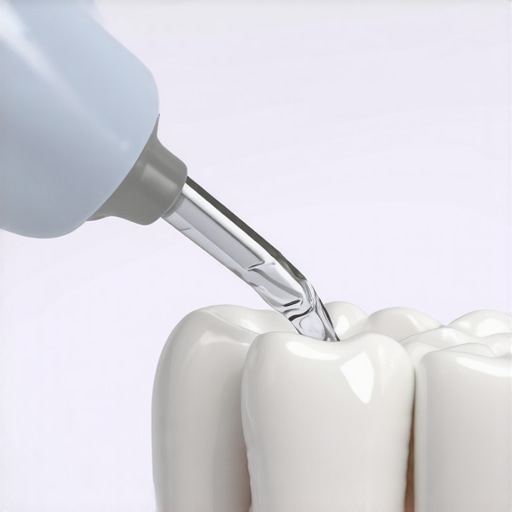
This is the question that haunts every dental patient when that cold zing persists. According to the American Association of Endodontists, post-operative sensitivity is often classified as reversible pulpitis—an inflamed nerve that still has the capacity to heal. The advanced nuance here is that the nerve is not necessarily dying; it is just reacting to a stimulus. If the source of the irritation, like a microscopic high spot on the bite or a gap in the temporary cement, is removed, the nerve can actually calm down. However, if you wait until the pain becomes a spontaneous throb that wakes you up at night, it has likely transitioned to irreversible status, where a root canal becomes the only way to save the tooth. Another trap is the ‘Gum Gap’ panic. When you first get your restoration, you might notice why your veneers might feel bulky when you first get them or that your gums appear slightly receded. This is not always a failure; sometimes it is an inflammatory response to the retraction cord. However, if the bleeding persists, you need to investigate the hidden reason your gums bleed even if you floss daily.  Finally, stop over-cleaning with the wrong tools. Using abrasive whitening pastes on a crown is like using steel wool on a luxury car. You are just scratching the glaze and inviting bacteria to stick to the margin. Stick to the family dentistry secrets for maintaining oral health with modern techniques and use non-abrasive gels that protect the junction where the tooth meets the cap. Have you ever fallen into the trap of thinking a crown made your tooth invincible? Let me know in the comments.If you want to keep that crown from becoming a $1,500 mistake, you have to shift your perspective on daily cleaning. I used to think string floss was the final word in hygiene, but for a crown, it can be deceptively insufficient. String floss often glides over the smooth porcelain but ‘jumps’ right over the margin—the tiny, critical seam where the crown meets your natural tooth. If bacteria find a home there, you are looking at secondary decay under the cap, which is a nightmare to fix. This is why I personally swear by a water flosser equipped with a ‘plaque seeker’ tip. I use it at a steady 90-degree angle to the gum line, focusing on the junction points. This isn’t just about general freshness; it is about pressure-washing the microscopic shelf that a standard toothbrush simply cannot reach, and it is one of the best family dentistry secrets for maintaining oral health. The specific tool I use is a model with variable pressure settings, because hitting a healing nerve with 100 PSI is a mistake you only make once. I find that the tapered brush tip provides a mechanical scrub while the pulsating water flushes the gingival sulcus. According to technical documentation from Spear Education, the long-term prognosis of any dental restoration is dictated by ‘biological width’—the specific distance between the crown margin and the underlying bone. If plaque triggers inflammation here, the bone actually retreats, leading to recession and that dreaded cold sensitivity again. This is why choosing the right crown expert matters as much as the material used; the fit must be perfect to allow for easy cleaning.
How do I maintain my dental restorations over time?
Maintaining your investment requires moving beyond the ‘brush and forget’ mentality. For my crowns, I have completely ditched abrasive whitening toothpastes that rely on heavy silica. These can eventually wear down the glaze on your porcelain, making it look dull and porous. Instead, I use a non-abrasive fluoride gel once a week to remineralize the exposed natural tooth at the margin. If you are balancing a restorative plan with orthodontic work, you also need to know how to keep your aligners clear while drinking tea, as stained aligners are a breeding ground for the same bacteria that attack crown margins. For a deeper dive into these daily habits, I recommend checking out the ultimate guide to crowns for a healthier smile. Looking toward the future, I predict we are entering the era of ‘preventative data.’ We are already seeing Invisalign innovations that allow for AI-assisted tracking of tooth movement from home. Within the next decade, I expect 3D-printed restorations to be infused with bioactive materials that slowly release fluoride directly into the seam where the tooth meets the cap. Until that tech arrives, we have to rely on proven top oral health tips for your family’s bright smiles. My specific advanced tip for you today? Fill your water flosser reservoir with lukewarm water and a teaspoon of sea salt once a week. It acts as a natural astringent for the gums around your crown, keeping them tight and healthy. Try this tonight and feel the difference in gum tightness by morning.
The One Truth About Healing That Most Dentists Glide Over
The most important thing I learned through my dental journey is that nerves have memory. Even after the mechanical work of placing a crown is finished, your tooth nerve might still be ‘echoing’ the trauma of the procedure for several weeks. It is crucial to remember that why your new crown feels sensitive to cold drinks is often just biological lag, not a sign of a failed restoration. Don’t rush into a panic thinking you need a root canal on day three; give the inflammation a real chance to subside using the salt water rinse trick for a sore mouth. Another lightbulb moment for me was realizing that the ‘margin’—that tiny seam where the porcelain meets your natural gum line—is the ultimate gateway for sensitivity. If you aren’t protecting that specific seal, you are inviting thermal discomfort to linger much longer than it should.
My Go-To Toolkit for Taming a Temperamental Nerve
I have spent years perfecting a daily routine to keep my dental work in top shape, and these are the tools I actually trust. First, I never use cold water in my water flosser; I always use lukewarm water to prevent thermal shock to the healing nerve. Second, I have transitioned to the safest way to use an electric toothbrush on sensitive teeth by holding it at a 45-degree angle rather than pressing directly onto the crown margin. I also frequently consult the ultimate guide to crowns for a healthier smile whenever I feel a new sensation. Finally, I always keep a high-quality fluoride gel on hand to strengthen the natural tooth structure at the base of the cap, which is one of those essential family dentistry secrets for maintaining oral health.
#IMAGE_PLACEHOLDER_E#
Stop Fearing the Ice Tray and Start Healing
You did not go through the time and expense of a dental procedure just to be afraid of a glass of iced tea for the rest of the year. By applying these small, daily adjustments, you are shifting from a reactive mindset to a proactive one. Focus on how crowns boost oral health confidence and give yourself the grace to let your body heal at its own pace. Your smile is an investment, and like any long-term investment, it requires a little patience and the right maintenance strategy to really pay off. Have you ever had a crown that took longer than expected to settle down? Let me know your experience in the comments below!